Bristol Myers Squibb Building Life Science Industry’s Most Advanced AI Factory on NVIDIA Vera Rubin
Original reporting by NVIDIA Blog
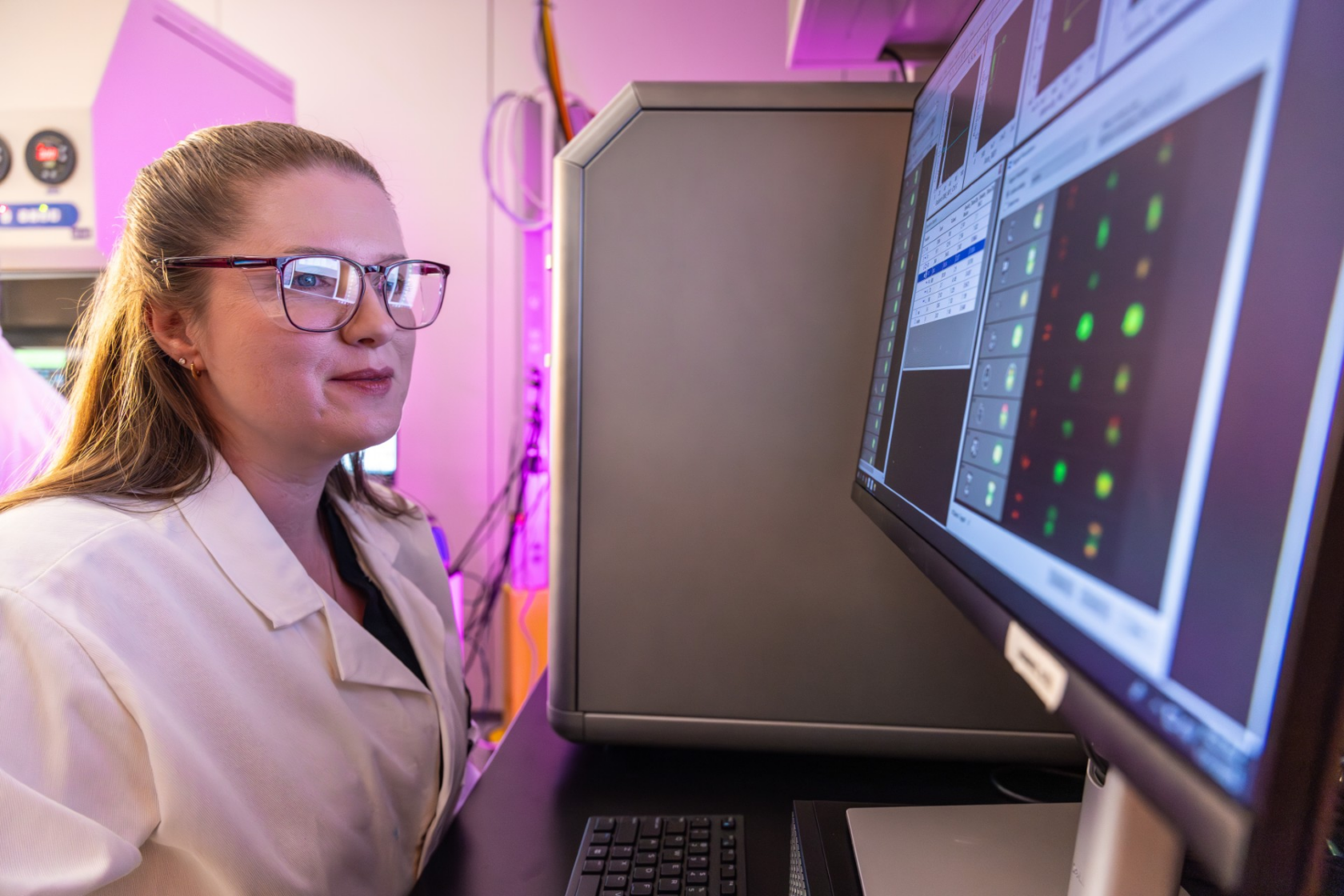
Bristol Myers Squibb’s "SuperDuperPOD" refers to the pharmaceutical giant's significant expansion of its artificial intelligence infrastructure, deploying its second NVIDIA DGX SuperPOD to create the most powerful and energy-efficient AI cluster in life sciences. Built on eight DGX Vera Rubin NVL72 systems, this new supercomputer is not merely an upgrade; it represents a strategic pivot to democratize AI access across the entire organization. Erin Davis, VP of research business insights and technology at BMS, highlights that "every scientist" will now have unlimited, immediate access, removing bottlenecks that previously hindered progress and democratizing cutting-edge computational power. This "limitless compute" environment, offering up to 10x the performance per megawatt of prior infrastructure, will power agentic workflows, accelerate predictions, and train foundational models across the full drug discovery pipeline, from exploring vast chemical spaces to optimizing lead compounds.
Unleashing Potential The prior DGX SuperPOD already demonstrated meaningful impact, saving scientists weeks in target identification and expanding compound libraries for critical treatments like blood cancer. With this new, unified system, BMS aims to transition AI from abstract potential to measurable impact, fostering a cumulative learning loop where every experiment, clinical readout, and insight contributes to a shared intelligence framework. Scientists like Payal Sheth emphasize how this augmented approach allows researchers to focus on the core science, leveraging comprehensive quantitative insights and predictions to make higher-conviction decisions faster. This ambitious scaling of AI is set to accelerate the development of new medicines, addressing urgent needs like Alzheimer's, a personal motivation for Davis.
Bristol Myers Squibb’s deployment of its "SuperDuperPOD" represents more than a mere technological upgrade; it signifies a profound internal transformation designed to democratize advanced AI across its entire scientific workforce. By unifying its powerful DGX SuperPOD infrastructure and making limitless compute resources accessible to every researcher, BMS is systematically dismantling traditional bottlenecks. This strategic move aims to accelerate drug discovery cycles, expand chemical exploration, and shift scientists' focus from logistical constraints to core scientific inquiry, leveraging an unprecedented "cumulative learning loop" and agentic workflows to augment human intelligence and drive higher-conviction decisions.
Shaping Future R&D
Beyond BMS, this initiative sets a new benchmark for the pharmaceutical industry, illustrating a crucial inflection point in how drug discovery will be conducted globally. The widespread integration of hyper-scale AI compute, capable of supporting foundational model development and complex simulations, promises to reshape the entire R&D landscape. It points towards an era where breakthroughs against diseases, many previously deemed intractable, become more attainable. This paradigm shift will likely lead to faster development timelines, more personalized medicines, and a fundamental re-evaluation of what is scientifically possible, heralding a future where the promise of AI in healthcare is not just conceptual, but a deeply embedded, operational reality.
Frequently asked questions
- How does Bristol Myers Squibb's new AI supercomputer accelerate pharmaceutical drug discovery?
- Bristol Myers Squibb is deploying powerful NVIDIA AI supercomputers to provide every scientist with unlimited access to advanced computational tools. This aims to speed up drug discovery cycles, enable exploration of larger chemical spaces, and streamline research pipelines. AI is used for tasks like identifying drug targets, expanding compound libraries, and optimizing drug candidates by predicting their behavior before laboratory experiments, ultimately shifting focus from logistics to scientific innovation.
- What specific advantages does advanced AI infrastructure offer in pharmaceutical drug development?
- Advanced AI infrastructure offers significant advantages by saving weeks of manual work, enabling faster target identification, and expanding chemical compound libraries for new medicines. It supports predictive design methodologies, allowing scientists to prioritize molecules with the highest probability of success for experimental validation. This creates a cumulative learning system where insights from every project contribute to future discoveries, enhancing the efficiency and effectiveness of the entire development process.
- What advanced AI computing systems are pharmaceutical companies like BMS deploying for research?
- Pharmaceutical companies like Bristol Myers Squibb are deploying state-of-the-art AI computing systems, specifically NVIDIA DGX SuperPODs, built on DGX Vera Rubin NVL72 systems. These clusters provide a unified AI platform, incorporating tools such as the NVIDIA BioNeMo Agent Toolkit. This infrastructure empowers researchers to run complex predictions, train sophisticated models, and power agentic workflows across the entire drug discovery pipeline, significantly enhancing research capabilities and innovation.