Firefly Aerospace Operates NVIDIA Jetson in Lunar Orbit for the First Time
Original reporting by NVIDIA Blog
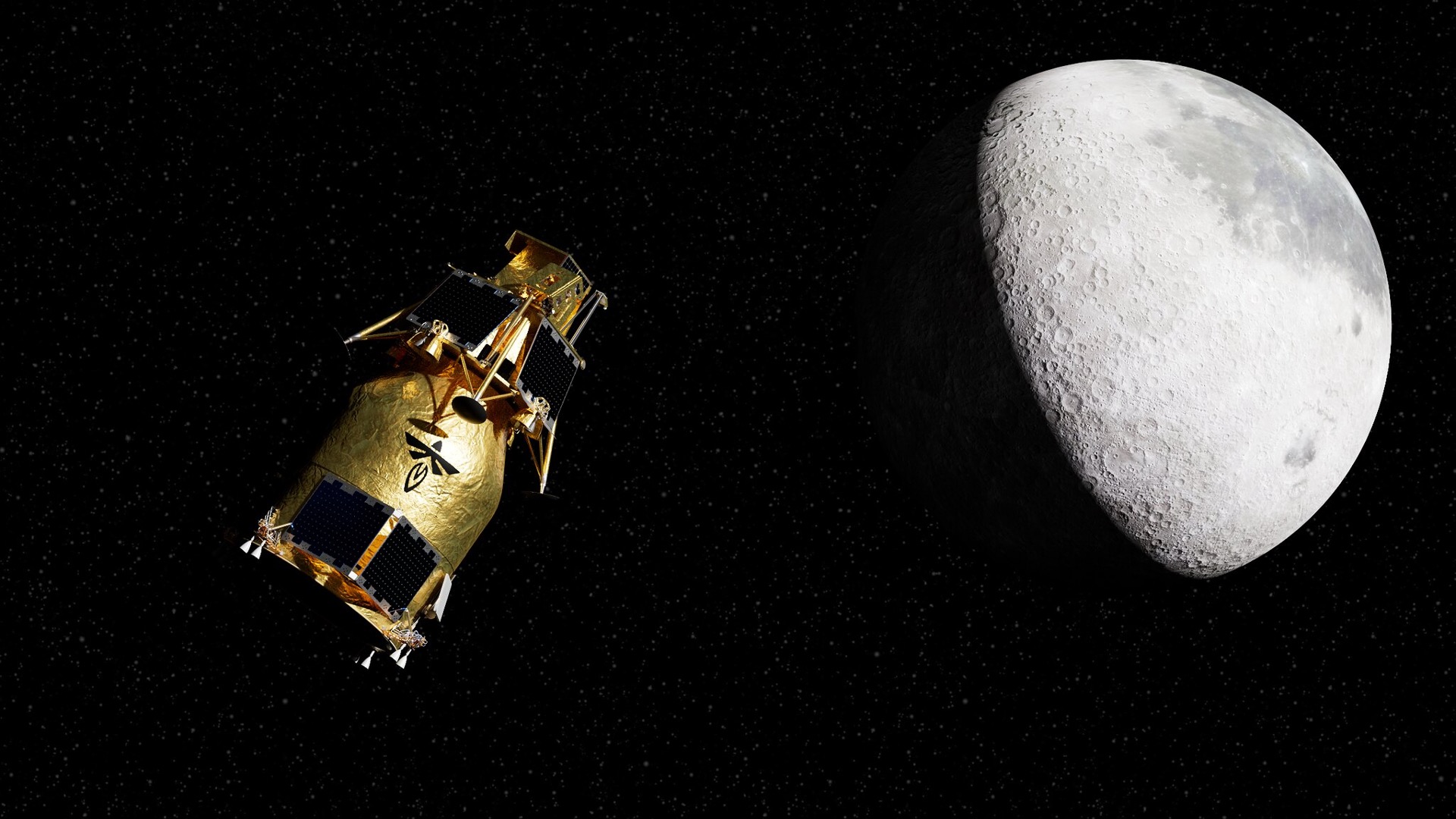
Ocula, Firefly Aerospace's moon imaging service, is set to transform lunar data processing by integrating NVIDIA Jetson edge AI directly into spacecraft. This innovative approach shifts computational power from Earth to lunar orbit, enabling real-time analysis and significantly accelerating the pace of scientific discovery. Historically, missions like Firefly’s own Blue Ghost Mission 1, which landed on the moon in 2025, captured vast quantities of raw imagery and video—nearly 120 gigabytes—that required weeks or months of terrestrial processing. This traditional slow pipeline often delays critical insights and incurs substantial costs for downlinking large data volumes.
Firefly’s upcoming Blue Ghost Mission 2, targeted for late 2026, will deploy the Ocula service, marking the first time the NVIDIA Jetson platform operates in lunar orbit. Rather than transmitting massive datasets home, Ocula will run AI algorithms directly on the Elytra spacecraft, extracting only the most relevant information based on customer needs and transmitting it back to Earth in near real time. This vastly reduces latency and costly downlink requirements, providing immediate actionable intelligence. Firefly CEO Jason Kim envisions a future where all AI processing happens in space, creating a connected ecosystem akin to Earth's transatlantic cables and paving the way for unprecedented lunar exploration and resource utilization.
Firefly Aerospace’s deployment of the Ocula service, powered by NVIDIA Jetson, represents a seminal moment in space exploration. By shifting AI inference from Earth-bound data centers to lunar orbit, this initiative dramatically accelerates the pace of discovery, transforming raw space data into actionable insights in near real time. This capability not only streamlines operations for missions like Blue Ghost Mission 2 but also sharply reduces the bandwidth demands and prohibitive costs associated with extensive data downlinking.
This pioneering move extends far beyond immediate efficiency gains for lunar imaging. It heralds a fundamental paradigm shift in how humanity interacts with the cosmos, laying the groundwork for truly autonomous space operations and intelligent data processing directly at the source. The vision articulated by Firefly’s CEO, Jason Kim, of an “internet in space” powered by ubiquitous edge AI, begins to materialize with such endeavors.
Shaping the Cislunar Future The broader implications are profound. This distributed intelligence architecture is critical for enabling sustained human presence on the Moon, facilitating resource extraction, and providing vital situational awareness across the burgeoning cislunar domain. As more nations and commercial entities venture into this space, on-orbit AI will be indispensable for managing complex missions, ensuring safety, and optimizing scientific returns. Future iterations, leveraging NVIDIA's evolving platforms, promise even greater capabilities, ultimately accelerating scientific understanding and fostering a robust, interconnected space economy. This is not merely a technological upgrade; it is an architectural revolution preparing us for the next era of space exploration.
Frequently asked questions
- What is Firefly's Ocula lunar imaging service and its purpose for moon missions?
- Firefly Aerospace's Ocula is a lunar imaging service that utilizes the NVIDIA Jetson edge AI platform to process data directly in space. Its purpose is to accelerate the extraction of critical insights from lunar imagery and video by performing AI inference on orbit. This approach vastly reduces the need to downlink massive volumes of raw data, significantly lowering latency and processing time for customers.
- How does NVIDIA Jetson edge AI improve data processing for lunar missions?
- NVIDIA Jetson edge AI platforms enable on-orbit data processing for lunar missions by running AI algorithms directly in space. This capability allows for immediate analysis of raw imagery and video, extracting relevant information before transmitting it to Earth. This process dramatically reduces the volume of data sent back, cutting down bandwidth costs and delivering crucial insights to researchers and customers in near real time.
- What are the main applications of Firefly's Ocula service in lunar exploration?
- Firefly's Ocula service supports several key applications in lunar exploration. These include mapping potential lunar landing sites with high-resolution imagery and fine-grained surface details, detecting vital lunar mineral compositions like ilmenite, and providing situational awareness for infrastructure and operations on the moon. It also tracks objects and monitors space activities within the broader cislunar domain.