NVIDIA Introduces New Jetson Thor Computers to Advance Mainstream Robotics and Edge AI
Original reporting by NVIDIA Blog
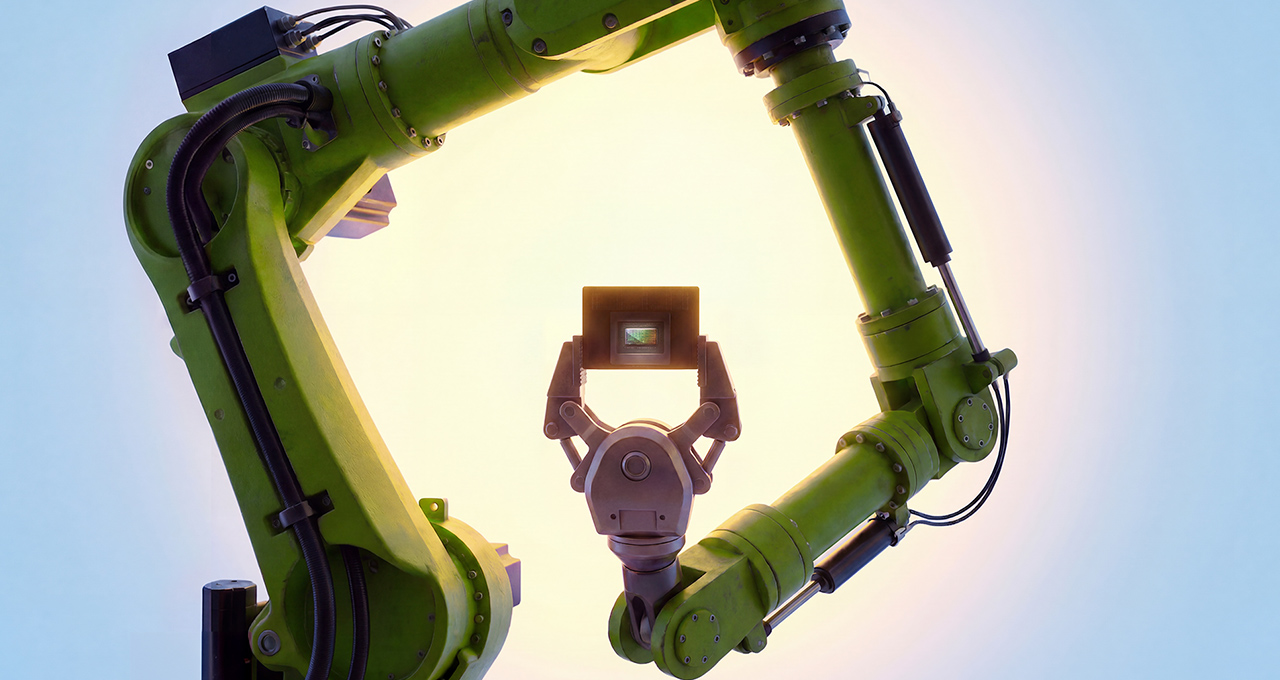
NVIDIA's T3000 and T2000 modules refer to the company's latest, compact AI supercomputers designed to power mass-market robotics and edge AI applications. As general-purpose robots and autonomous machines transition from research labs into real-world deployments, the demand for sophisticated, power-efficient AI at the edge has surged. To meet this need, NVIDIA has unveiled these new modules, built on the advanced Thor architecture, enabling next-generation humanoid and robotic systems to run complex foundation models directly on-device.
Unlocking New Capabilities
The T3000 module delivers an impressive 865 FP4 teraflops of AI compute in a form factor roughly half the size and power of its predecessor, combining a Blackwell GPU, Arm CPU, and substantial memory. It matches the inference performance of larger systems for multimodal workloads, allowing for cost-effective deployment. The T2000 further extends the Thor architecture to a broader range of edge AI systems with 400 FP4 teraflops, providing an accessible entry point for developers. Complementing this hardware, new AI agent skills automate memory optimization across all Jetson devices, significantly reducing system costs and development time. Furthermore, the lightweight Cosmos 3 Edge foundation model, compatible with Thor platforms, allows embodied systems to reason and act in real-time. Together, these innovations create a scalable, agentic-ready platform for accelerating the development and deployment of intelligent humanoids and autonomous machines.
NVIDIA's introduction of the T3000 and T2000 modules marks a definitive stride in accelerating edge AI and robotics into mass-market deployment. These compact, power-efficient supercomputers, built on the Thor architecture, are engineered to bring sophisticated foundation models to the heart of autonomous machines and humanoids. Coupled with critical software advancements like Jetson agent skills for memory optimization and Cosmos 3 Edge for on-device reasoning, NVIDIA is significantly democratizing access to advanced capabilities, enabling developers to optimize performance and reduce deployment costs. This integrated hardware and software stack is purposefully designed to push advanced AI from research environments into practical, real-world applications at scale.
Physical AI's Horizon This comprehensive strategy signifies more than just new compute modules; it represents a fundamental acceleration in the deployment of physical AI. By making powerful, intelligent computation accessible directly at the edge, NVIDIA is empowering a new generation of autonomous systems to operate with unprecedented capability, safety, and efficiency outside controlled environments. The ability to deploy complex foundation models on smaller, lower-cost configurations fosters innovation across industries—from advanced manufacturing and logistics to healthcare and personal robotics. This paradigm shift will not only transform how businesses operate through more adaptive automation but also fundamentally alter human interaction with technology, leading to a future where sophisticated AI agents seamlessly integrate into our physical world, performing complex tasks with greater autonomy, adaptability, and understanding. This is a crucial step toward widespread embodied intelligence, where machines learn, reason, and act in real-time.
Frequently asked questions
- What are the new NVIDIA T3000 and T2000 modules used for in AI?
- The NVIDIA T3000 and T2000 modules are compact, power-efficient AI supercomputers designed for mass-market robotics and edge AI applications. Based on the NVIDIA Thor architecture, they enable devices to run complex foundation models locally. The T3000 offers higher compute (865 FP4 teraflops) for advanced humanoids, while the T2000 (400 FP4 teraflops) serves a broader range of intelligent machines and visual AI agents. They are scheduled for availability in Q1 2027.
- How do NVIDIA's new Jetson agent skills optimize AI development and memory usage?
- Jetson agent skills automate memory optimization, system configuration, and deployment tasks for AI developers across the Jetson portfolio. This automation significantly reduces the time and expertise needed to achieve substantial memory savings. It allows more capable AI workloads to run efficiently on lower-memory configurations, thereby lowering system costs, accelerating deployment, and providing greater flexibility in hardware choices without compromising performance. Companies have achieved memory reductions of up to 15GB using these skills.
- What is the purpose of the NVIDIA Cosmos 3 Edge foundation model for robots?
- Cosmos 3 Edge is a lightweight, 4-billion-parameter open world foundation model built for embodied AI systems. It enables robots and autonomous machines to perceive their environment, reason in real time, and predict and generate actions through on-device inference on NVIDIA Thor platforms. Developers can quickly fine-tune Cosmos 3 Edge for specific robot embodiments and sensors, accelerating the transition from simulation to real-world deployment for advanced robot policies.